


The Hidden Cost of Clinical Journaling
The Hidden Cost of Clinical Journaling
Research
5.min.
01/12/2025

Signe Klitgaard
Head of Operations


Must Patient Care Suffer for the Sake of Documentation? The Hidden Cost of Clinical Journaling
Clinical documentation is a necessary and non-negotiable part of the work performed by therapists, psychologists, and all healthcare professionals. However, recent surveys confirm what many already feel: this administrative burden consistently cuts into valuable patient and client time.
The reality of documentation today is taking a serious toll on practitioners and, crucially, affecting the quality of care provided.
The Overwhelming Statistics
Our recent survey of 100 therapists paints a clear picture of the administrative strain:
A massive 75% of therapists experience journaling as a stressful part of their daily routine.
70% feel that the administrative work associated with documentation negatively impacts their working environment.
50% report they often or always need to complete documentation outside of their regular working hours.
60% are forced to perform all or parts of the clinical documentation after the therapy session has concluded.
Taking Time Away from Clients
The administrative pressure directly compromises the client experience. The vast majority of therapists believe that without the burden of contemporaneous documentation, they could offer profoundly better care:
87% of therapists believe they could give more attention to the client if they did not have to simultaneously manage documentation.
83% feel they could provide the client with a better overall experience.
Even more concerning, 65% of therapists believe that the lack of time for proper journaling poses a risk factor for client safety. When time constraints lead to rushed or incomplete notes, the potential for error increases.
The Complexity Demands a Smarter Solution
Workshops with both psychologists and medical doctors confirm that clinical notes are complex, varying significantly between professional roles and specific clinics. Documentation is not just about recording the meeting—different roles, session types, therapeutic methods, and sub-disciplines all influence what precisely must be registered.
This complexity is where AI can step in. Nila utilizes advanced technology to understand complex contexts, intonations, and detailed information from long sessions, while simultaneously adapting the documentation to each therapist's language and writing style.
With Curera, professionals receive a tool that doesn't just document—it frees up time for the most essential element: the client. Our AI solution makes it possible to streamline and quality-assure documentation, allowing healthcare staff to focus on empathy, treatment, and the therapeutic relationship instead of administrative burdens.
In short, Nila helps you achieve what truly matters—giving you Time back for Care.
Must Patient Care Suffer for the Sake of Documentation? The Hidden Cost of Clinical Journaling
Clinical documentation is a necessary and non-negotiable part of the work performed by therapists, psychologists, and all healthcare professionals. However, recent surveys confirm what many already feel: this administrative burden consistently cuts into valuable patient and client time.
The reality of documentation today is taking a serious toll on practitioners and, crucially, affecting the quality of care provided.
The Overwhelming Statistics
Our recent survey of 100 therapists paints a clear picture of the administrative strain:
A massive 75% of therapists experience journaling as a stressful part of their daily routine.
70% feel that the administrative work associated with documentation negatively impacts their working environment.
50% report they often or always need to complete documentation outside of their regular working hours.
60% are forced to perform all or parts of the clinical documentation after the therapy session has concluded.
Taking Time Away from Clients
The administrative pressure directly compromises the client experience. The vast majority of therapists believe that without the burden of contemporaneous documentation, they could offer profoundly better care:
87% of therapists believe they could give more attention to the client if they did not have to simultaneously manage documentation.
83% feel they could provide the client with a better overall experience.
Even more concerning, 65% of therapists believe that the lack of time for proper journaling poses a risk factor for client safety. When time constraints lead to rushed or incomplete notes, the potential for error increases.
The Complexity Demands a Smarter Solution
Workshops with both psychologists and medical doctors confirm that clinical notes are complex, varying significantly between professional roles and specific clinics. Documentation is not just about recording the meeting—different roles, session types, therapeutic methods, and sub-disciplines all influence what precisely must be registered.
This complexity is where AI can step in. Nila utilizes advanced technology to understand complex contexts, intonations, and detailed information from long sessions, while simultaneously adapting the documentation to each therapist's language and writing style.
With Curera, professionals receive a tool that doesn't just document—it frees up time for the most essential element: the client. Our AI solution makes it possible to streamline and quality-assure documentation, allowing healthcare staff to focus on empathy, treatment, and the therapeutic relationship instead of administrative burdens.
In short, Nila helps you achieve what truly matters—giving you Time back for Care.

Free up your time today
Join hundreds of therapists who have transformed their practice with intelligent documentation
Free up your time today
Join hundreds of therapists who have transformed their practice with intelligent documentation
Free up your time today
Join hundreds of therapists who have transformed their practice with intelligent documentation
From recording to structured notes
1.
1.
The therapist records the session (in-person or online);
The therapist records the session (in-person or online);
2.
2.
AI transcribes speech into accurate text;
AI transcribes speech into accurate text;
3.
3.
Smart algorithms identify key topics, emotions, and action points;
Smart algorithms identify key topics, emotions, and action points;
4.
4.
The system generates a structured summary with clear sections and formatting.
The system generates a structured summary with clear sections and formatting.
This workflow turns an hour of manual work into a few clicks.
This workflow turns an hour of manual work into a few clicks.

User-friendly and frees up mental space for patient visits.
User-friendly and frees up mental space for patient visits.
- Maja, Psychologist, Sweden
- Maja, Psychologist, Sweden
Share this post
About the author
Signe Klitgaard
Head of Operations
Signe Klitgaard is Head of Operations Therapy at Nila, focusing on mental health innovation and digital tools for therapists. She collaborates closely with clinicians to translate complex ideas into accessible, evidence-based insights.
Related articles
Related articles
Explore more insights from our team of experts
Explore more insights from our team of experts
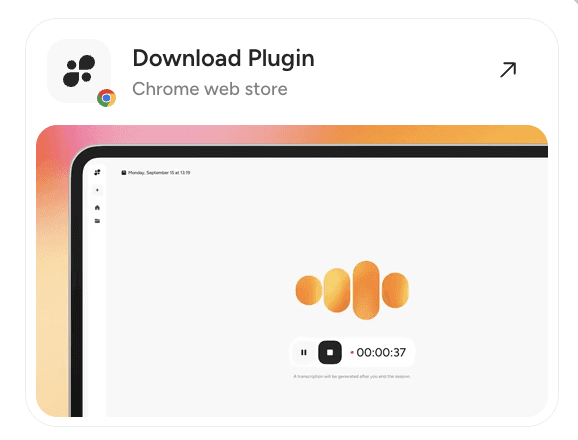
Seamless Integration: Getting Started with Nila’s Simple Workflow
Starting your journey with Nila should be as easy as logging in.
Technology
2.min.
Record Keeping – Compliance and the Nila Solution
Record Keeping is a central and legally required part of healthcare practice, and essential for ensuring high standards of patient care, safety, and quality.
Compliance
4.min.

About the team
Who is behind Nila?
Technology
1.min.
Seamless Integration: Getting Started with Nila’s Simple Workflow
Starting your journey with Nila should be as easy as logging in.
Technology
2.min.
Record Keeping – Compliance and the Nila Solution
Record Keeping is a central and legally required part of healthcare practice, and essential for ensuring high standards of patient care, safety, and quality.
Compliance
4.min.
About the team
Who is behind Nila?
Technology
1.min.
Seamless Integration: Getting Started with Nila’s Simple Workflow
Starting your journey with Nila should be as easy as logging in.
Technology
2.min.
Record Keeping – Compliance and the Nila Solution
Record Keeping is a central and legally required part of healthcare practice, and essential for ensuring high standards of patient care, safety, and quality.
Compliance
4.min.
About the team
Who is behind Nila?
Technology
1.min.
Seamless Integration: Getting Started with Nila’s Simple Workflow
Starting your journey with Nila should be as easy as logging in.
Technology
2.min.
Record Keeping – Compliance and the Nila Solution
Record Keeping is a central and legally required part of healthcare practice, and essential for ensuring high standards of patient care, safety, and quality.
Compliance
4.min.
About the team
Who is behind Nila?
Technology
1.min.
Free up your
time today
Free up your
time today
Free up your
time today
Join hundreds of therapists who have transformed their practice with intelligent documentation
Join hundreds of therapists who have transformed their practice with intelligent documentation
Join hundreds of therapists who have transformed their practice with intelligent documentation
A Lavendla product
A Lavendla product
4.7 / 5 on


ISO
27001
ISO
27001
ISO
27001
GDPR
Compliant
GDPR
Compliant
GDPR
Compliant
CE marking
EU-MDR
CE marking
EU-MDR
CE marking
EU-MDR


Terms & policy
Join our newsletter to stay up to date on features and releases
By subscribing you agree to with our Privacy Policy and provide consent to receive updates from our company.

© Nila Health AB 2026

Terms & policy
Join our newsletter to stay up to date on features and releases
By subscribing you agree to with our Privacy Policy and provide consent to receive updates from our company.
© Nila Health AB 2026
Terms & policy
Join our newsletter to stay up to date on features and releases
By subscribing you agree to with our Privacy Policy and provide consent to receive updates from our company.
Cookie settings
© Nila Health AB 2025
Terms & policy
Join our newsletter to stay up to date on features and releases
By subscribing you agree to with our Privacy Policy and provide consent to receive updates from our company.
© Nila Health AB 2026