


Interview with DPO
Interview with DPO
Compliance
5.min.
01/12/2025

Signe Klitgaard
Head of Operations


1. Who is the Data Controller and what are their responsibilities?
The Data Controller determines the purposes and means for how personal data is used. They are responsible for ensuring that the entire operation complies with the GDPR, that adequate security measures are in place, and that all agreements with suppliers reflect the same level of data protection.
2. What is the role of a Data Processor?
A Data Processor handles personal data on behalf of the Data Controller. They strictly follow the instructions provided and are not permitted to make independent decisions regarding data management. Curera can act as both a Controller and a Processor, depending on the specific situation.
3. What is the role of the Data Protection Officer (DPO)?
The DPO primarily acts as an advisor and monitors overall compliance with the GDPR. They are not involved in the daily processing of personal data but assist the organization in identifying risks and ensuring that data protection routines are followed.
4. How is data protection ensured operationally?
All employees have a responsibility to handle personal data correctly. This is achieved through mandatory training, clear processes, checklists, and regular follow-up across various parts of the organization.
5. How are personal data breaches handled?
The company must have a clear incident process which involves:
Quickly identifying who is responsible for reporting.
Informing the DPO when necessary.
Reporting to the Supervisory Authority within 72 hours if the risk to individuals' rights and freedoms is high.
Following up on measures taken and implementing improvements to prevent future incidents.
6. Does GDPR apply the same rules across the entire EU?
Yes, the GDPR is a common set of laws across the entire EU. However, supplementary national rules may exist, such as the Swedish Data Protection Act.
7. How does GDPR apply when processing data outside the EU?
The GDPR also applies to companies outside the EU that handle data concerning EU citizens. When transferring data to a third country, adequate agreements and security measures are required, in addition to any local legal requirements.
8. Can an entity hold multiple roles within data protection?
Yes. A company can act as both a Controller and a Processor in different parts or contexts of its operation. Roles are defined based on the specific data being handled and the company’s internal structure.
9. How often should data protection be checked and followed up on?
Controls should take place continuously, with regular internal reports, for example, four times per year. Regular follow-up allows the organization to identify shortcomings and improve routines effectively.
10. Who receives information about data protection status and control results?
Information is shared internally with management and the board for follow-up and decisions regarding necessary improvements. This information is part of the internal data protection culture and is not intended to be shared with the general public.
1. Who is the Data Controller and what are their responsibilities?
The Data Controller determines the purposes and means for how personal data is used. They are responsible for ensuring that the entire operation complies with the GDPR, that adequate security measures are in place, and that all agreements with suppliers reflect the same level of data protection.
2. What is the role of a Data Processor?
A Data Processor handles personal data on behalf of the Data Controller. They strictly follow the instructions provided and are not permitted to make independent decisions regarding data management. Curera can act as both a Controller and a Processor, depending on the specific situation.
3. What is the role of the Data Protection Officer (DPO)?
The DPO primarily acts as an advisor and monitors overall compliance with the GDPR. They are not involved in the daily processing of personal data but assist the organization in identifying risks and ensuring that data protection routines are followed.
4. How is data protection ensured operationally?
All employees have a responsibility to handle personal data correctly. This is achieved through mandatory training, clear processes, checklists, and regular follow-up across various parts of the organization.
5. How are personal data breaches handled?
The company must have a clear incident process which involves:
Quickly identifying who is responsible for reporting.
Informing the DPO when necessary.
Reporting to the Supervisory Authority within 72 hours if the risk to individuals' rights and freedoms is high.
Following up on measures taken and implementing improvements to prevent future incidents.
6. Does GDPR apply the same rules across the entire EU?
Yes, the GDPR is a common set of laws across the entire EU. However, supplementary national rules may exist, such as the Swedish Data Protection Act.
7. How does GDPR apply when processing data outside the EU?
The GDPR also applies to companies outside the EU that handle data concerning EU citizens. When transferring data to a third country, adequate agreements and security measures are required, in addition to any local legal requirements.
8. Can an entity hold multiple roles within data protection?
Yes. A company can act as both a Controller and a Processor in different parts or contexts of its operation. Roles are defined based on the specific data being handled and the company’s internal structure.
9. How often should data protection be checked and followed up on?
Controls should take place continuously, with regular internal reports, for example, four times per year. Regular follow-up allows the organization to identify shortcomings and improve routines effectively.
10. Who receives information about data protection status and control results?
Information is shared internally with management and the board for follow-up and decisions regarding necessary improvements. This information is part of the internal data protection culture and is not intended to be shared with the general public.
From recording to structured notes
1.
1.
The therapist records the session (in-person or online);
The therapist records the session (in-person or online);
2.
2.
AI transcribes speech into accurate text;
AI transcribes speech into accurate text;
3.
3.
Smart algorithms identify key topics, emotions, and action points;
Smart algorithms identify key topics, emotions, and action points;
4.
4.
The system generates a structured summary with clear sections and formatting.
The system generates a structured summary with clear sections and formatting.
This workflow turns an hour of manual work into a few clicks.
This workflow turns an hour of manual work into a few clicks.
Example of workflow in action
AI automatically detects conversation context and organizes insights into note templates.
AI automatically detects conversation context and organizes insights into note templates.
Share this post
About the author
Signe Klitgaard
Head of Operations
Signe Klitgaard is Head of Operations Therapy at Nila, focusing on mental health innovation and digital tools for therapists. She collaborates closely with clinicians to translate complex ideas into accessible, evidence-based insights.
Related articles
Related articles
Explore more insights from our team of experts
Explore more insights from our team of experts
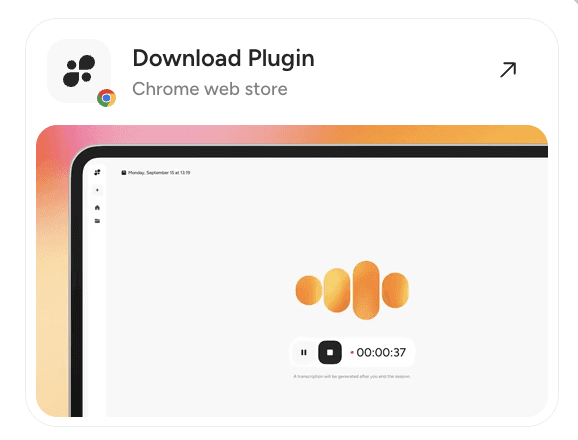
Seamless Integration: Getting Started with Nila’s Simple Workflow
Starting your journey with Nila should be as easy as logging in.
Technology
2.min.
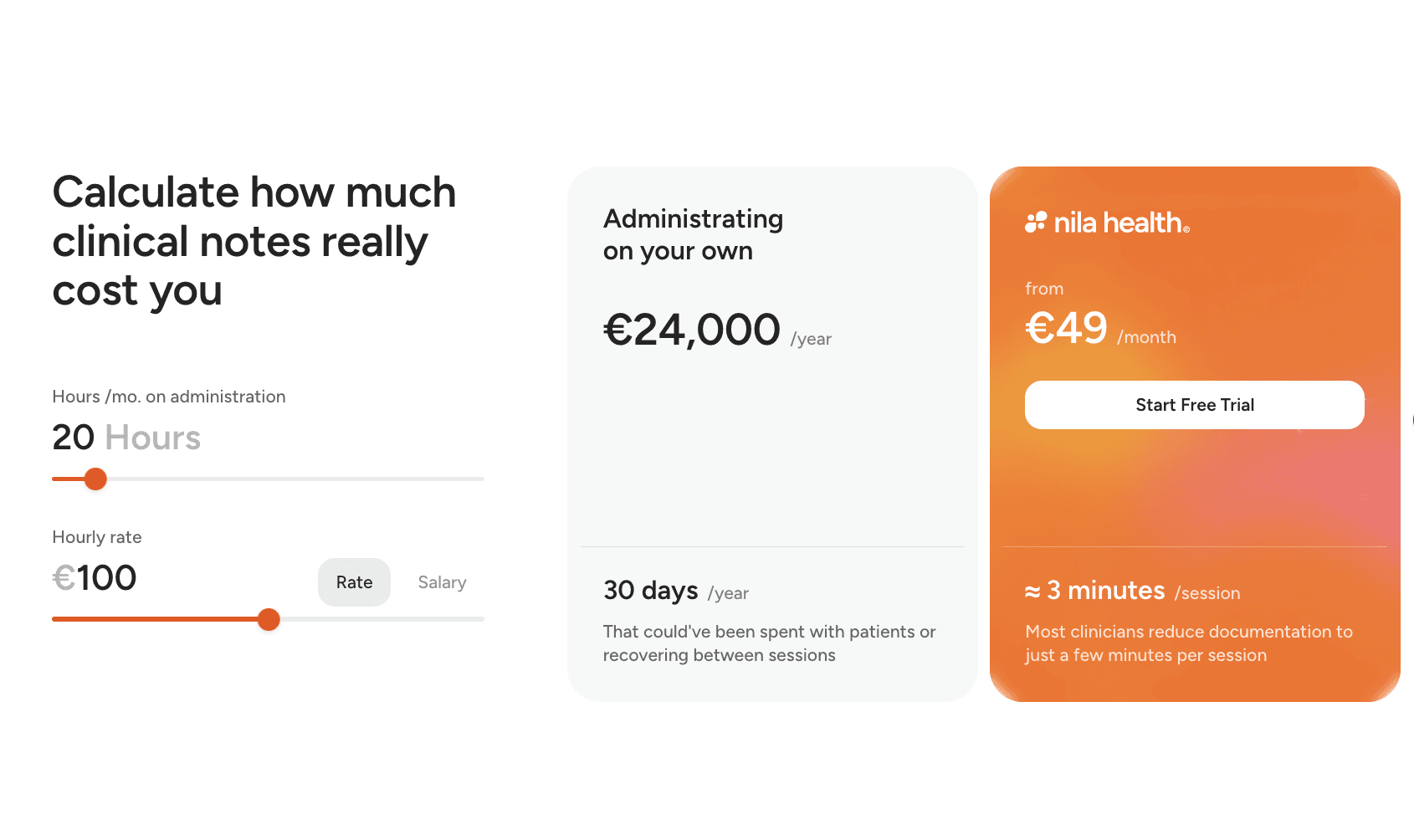
The Hidden Cost of Clinical Journaling
Many professionals feel the administrative burden consistently cuts into valuable patient and client time.
Research
5.min.

About the team
Who is behind Nila?
Technology
1.min.
Seamless Integration: Getting Started with Nila’s Simple Workflow
Starting your journey with Nila should be as easy as logging in.
Technology
2.min.
The Hidden Cost of Clinical Journaling
Many professionals feel the administrative burden consistently cuts into valuable patient and client time.
Research
5.min.
About the team
Who is behind Nila?
Technology
1.min.
Seamless Integration: Getting Started with Nila’s Simple Workflow
Starting your journey with Nila should be as easy as logging in.
Technology
2.min.
The Hidden Cost of Clinical Journaling
Many professionals feel the administrative burden consistently cuts into valuable patient and client time.
Research
5.min.
About the team
Who is behind Nila?
Technology
1.min.
Seamless Integration: Getting Started with Nila’s Simple Workflow
Starting your journey with Nila should be as easy as logging in.
Technology
2.min.
The Hidden Cost of Clinical Journaling
Many professionals feel the administrative burden consistently cuts into valuable patient and client time.
Research
5.min.
About the team
Who is behind Nila?
Technology
1.min.
Free up your
time today
Free up your
time today
Free up your
time today
Join hundreds of therapists who have transformed their practice with intelligent documentation
Join hundreds of therapists who have transformed their practice with intelligent documentation
Join hundreds of therapists who have transformed their practice with intelligent documentation
A Lavendla product
A Lavendla product
4.7 / 5 on


ISO
27001
ISO
27001
ISO
27001
GDPR
Compliant
GDPR
Compliant
GDPR
Compliant
CE marking
EU-MDR
CE marking
EU-MDR
CE marking
EU-MDR


Terms & policy
Join our newsletter to stay up to date on features and releases
By subscribing you agree to with our Privacy Policy and provide consent to receive updates from our company.

© Nila Health AB 2026

Terms & policy
Join our newsletter to stay up to date on features and releases
By subscribing you agree to with our Privacy Policy and provide consent to receive updates from our company.
© Nila Health AB 2026
Terms & policy
Join our newsletter to stay up to date on features and releases
By subscribing you agree to with our Privacy Policy and provide consent to receive updates from our company.
Cookie settings
© Nila Health AB 2025
Terms & policy
Join our newsletter to stay up to date on features and releases
By subscribing you agree to with our Privacy Policy and provide consent to receive updates from our company.
© Nila Health AB 2026